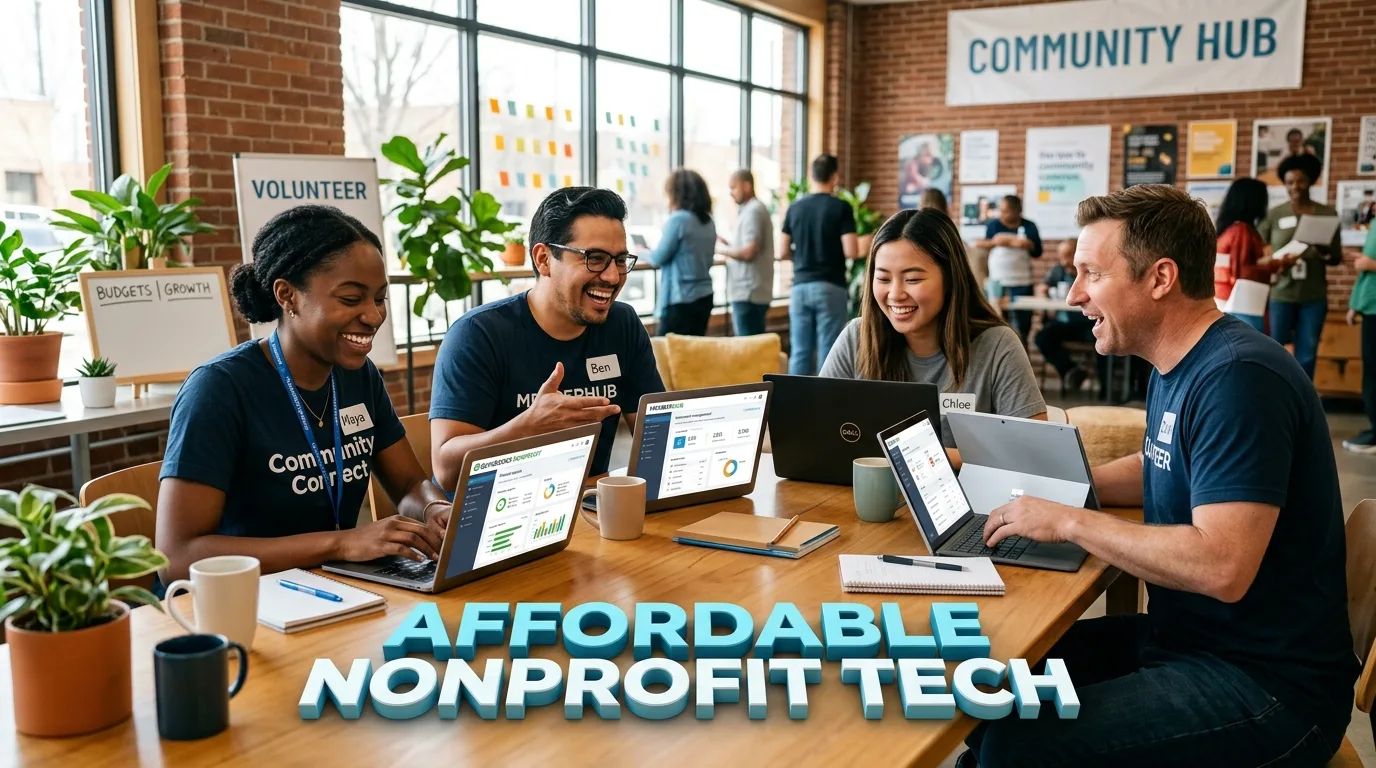
Affordable coding platforms for high school students are actually a brilliant resource for small nonprofits looking to save money on technology. I once spent an entire weekend fighting with a broken database that cost us hundreds of dollars in lost donations. It was a wake-up call that our tools were working against our mission. You deserve a tech stack that works without draining your entire annual budget for your group.
1. Canva for Nonprofits
Visual storytelling usually requires an expensive designer or a steep learning curve with confusing professional software. Canva for Nonprofits gives you access to premium features for free so you can create social media posts that actually get noticed. I used it to design our last annual report and the board was blown away by the quality of the graphics.
You can invite team members to collaborate on designs in real time which keeps your branding consistent across every platform. It is the easiest way to make your small group look established and trustworthy to potential donors. Most of the templates are drag-and-drop so you do not need any previous design experience to get started.
2. Google for Nonprofits

Operating on a shoestring budget means you cannot afford to pay for expensive enterprise email hosting or document storage. Google for Nonprofits provides the entire Workspace suite for free which includes professional Gmail addresses for your whole team. I found that having an official email address made our outreach feel much more legitimate when contacting local news stations.
The shared drives are a lifesaver for keeping all your board meeting minutes and volunteer waivers in one secure place. You also get access to the Google Ad Grant which provides ten thousand dollars in search advertising every single month. It is essentially free marketing that helps people find your cause when they are searching for ways to help.
3. TechSoup
Accessing massive discounts on hardware and software is the best kept secret in the nonprofit world. TechSoup is a bridge between tech giants and charities that offers items like laptops and Adobe subscriptions for a tiny administrative fee. FYI, you have to go through a verification process to prove you are a registered 501c3 before you can start shopping.
I managed to get our office three brand new computers for less than the price of one retail laptop. They also offer discounted cloud services and training webinars to help your staff get up to speed with new technology. It should be the very first website you visit when you realize your current equipment is falling apart.
4. MailerLite
Sending out professional newsletters used to be a luxury reserved for groups with massive donor lists. MailerLite provides a free tier for up to a thousand subscribers which is more than enough for most startup groups. I like that the interface is just as intuitive as affordable coding platforms for high school students so your volunteers can learn it fast.
It allows you to automate welcome emails so you can focus on real world impact instead of sitting at a computer all day. The drag-and-drop editor makes it simple to add donation buttons and success stories into every update you send. You can even track which links people are clicking to see what your supporters care about most.
5. Slack
Internal team chatter can easily get lost in a sea of endless email threads and text messages. Slack offers a free plan for nonprofits that lets you organize conversations into different channels based on specific projects or committees. I noticed that our team morale improved significantly once we moved our casual updates out of the formal inbox.
The integration options allow you to connect Slack to your calendar so everyone knows when the next big event is happening. You can also hop on quick huddles for a voice call without needing to schedule a formal Zoom meeting. It keeps the energy high and ensures that no important information falls through the cracks during a busy week.
6. Trello
Project tracking is the only way to survive when you have ten different volunteers all working on different parts of a fundraiser. Trello uses a simple board and card system that lets you see exactly what stage each task is currently in. IMO, it is much better than a static to-do list because you can attach files and comments directly to the cards.
We used it to manage our last silent auction and it prevented us from accidentally asking the same business for a donation twice. The power-up features let you add due dates and labels to keep everything organized by priority level. It gives you a bird’s-eye view of your organization’s progress without requiring you to micromanage every single person.
7.Wave Accounting

Money management feels incredibly intimidating when you are not a professional accountant by trade. Wave is a free software that handles your bookkeeping and invoicing without charging a monthly subscription fee. Who has time to learn a complex accounting system between board meetings?
The receipt scanning mobile app is a total lifesaver for tracking small expenses during a volunteer event. You just snap a photo and the software automatically logs the data into your expense reports. It makes tax season much less stressful because your reports are already generated and ready to go for your board.
8. Donorbox
Online fundraising should be simple for your donors so they do not give up halfway through the process. Donorbox is a powerful donation plugin that you can embed directly into your website in just a few minutes. I love that it supports recurring donations which helps your nonprofit build a steady and predictable monthly income.
The low transaction fees ensure that more of the money actually goes toward your mission rather than the payment processor. It also allows donors to cover the processing fees themselves which most people are happy to do if you just ask. You can even set up a goal meter to show your supporters how close you are to your target.
9. Zapier
Automating tedious tasks is the best way to get your time back when you are running a small team. Zapier acts as a middleman that connects all your different software tools so they can share data automatically. For example, you can set it up so that every time someone fills out a volunteer form, they are automatically added to your email list.
The free tier for nonprofits allows you to run several different automations without paying a cent. It eliminates the need for manual data entry which is usually where most human errors happen. Once you set it up once, it runs in the background forever like a tiny digital assistant working for free.
10. Givebutter
Processing donations and selling event tickets usually requires two or three different paid platforms. Givebutter is a completely free solution that handles everything from Venmo payments to peer-to-peer fundraising pages. They make their money through optional tips from donors so the organization itself does not have to pay a platform fee.
I used it for a trivia night fundraiser and it was the most seamless experience I have ever had with event technology. The social features allow donors to leave messages and GIFs on your campaign wall which builds a sense of community. It feels much more modern and engaging than a standard, boring donation form.
11. Airtable
Organizing your volunteer data does not have to look like a boring spreadsheet from the nineties. Airtable combines a database with a colorful interface that makes it easy to track who is doing what for your organization. I find their free plan extremely generous for small teams that just need to stay organized during a busy event season.
The relational database features let you link volunteers to specific shifts without entering the same name twice. It is a massive time saver when you are juggling a dozen different tasks at once. You can even create custom views for your board members so they only see the data that matters to them.
12. Affordable coding platforms for high school students as a resource

Custom development for your nonprofit is possible if you tap into the talent on affordable coding platforms for high school students in your area. These young developers are often looking for meaningful projects to practice their skills for a college application or a summer internship. You can host your code on GitHub for free and let a local student volunteer build a custom solution for your needs.
It creates a powerful connection between your mission and the next generation of tech leaders who are already learning on these sites. You get a tool tailored to your specific workflow while they get a great reference and a portfolio piece that shows real world impact. Many of the most affordable coding platforms for high school students even have job boards where you can post volunteer opportunities for free.
13. Buffer
Social media management can take up your entire day if you are manually posting to every platform individually. Buffer allows you to schedule all your posts in advance so you can spend one hour on Monday and be done for the week. Why pay for a premium subscription when a free tool does the job just as well for a small group?
The scheduling calendar gives you a visual look at your content strategy so you can ensure you are not posting too much or too little. It helps you maintain a consistent presence online which is vital for staying in the minds of your supporters. You can also see basic analytics to understand which posts are getting the most engagement from your followers.
14. Bitly
Tracking your links is essential if you want to know which of your marketing efforts are actually working. Bitly allows you to shorten long, ugly URLs into clean links that are much easier to share on social media or in print materials. I use it to track how many people are actually clicking the link in our Instagram bio versus our email newsletter.
The click analytics tell you exactly when and where people are clicking on your content in real time. It helps you stop wasting time on platforms that are not driving any traffic to your donation page. Having a short and branded link also makes your organization look more professional and tech-savvy to the general public.
FAQs
How can I find software discounts for my nonprofit?
Most software companies have a nonprofit link at the bottom of their homepage where you can apply for a special discount. You will usually need to provide your official tax-exempt status letter to prove your eligibility to the company. Once you are approved, you can often access premium features for free or at a significantly reduced annual rate compared to business users.
What is TechSoup and how does it work?
TechSoup is a massive catalog of discounted technology specifically for charitable organizations and public libraries. They partner with big names like Microsoft and Adobe to offer software for just a small administrative fee to cover their costs. It is the first place you should check before buying any new laptops or expensive cloud subscriptions for your nonprofit team.
How can affordable coding platforms for high school students help my charity?
These sites produce talented teens who are eager to build real world experience by working on meaningful projects. You can reach out to local schools and offer students a chance to build your website or database for their portfolio. It is a cost-effective way to get high-quality technical help from kids using affordable coding platforms for high school students while giving them a valuable reference.
Is there a truly free way to collect donations online?
Givebutter is one of the few platforms that is truly free for the organization because it relies on tips from donors. While most processors still take a small percentage for credit card fees, many platforms allow the donor to cover those costs. This ensures that every cent of the actual donation amount goes directly toward your charitable programs.
Do I need a professional developer to use these tools?
You do not need any special technical skills to use the majority of the software options on this list. Most of them are designed with a user-friendly interface that anyone who can use a smartphone or a computer can navigate easily. If you do need something custom, that is when you should look for a volunteer developer to help you.
Conclusion
Building a professional tech stack for your group does not have to cost thousands of dollars if you know where to look. By combining these free tools with the talent found on various student platforms, you can grow your mission without any financial stress. Which of these software options are you going to set up for your team first?